
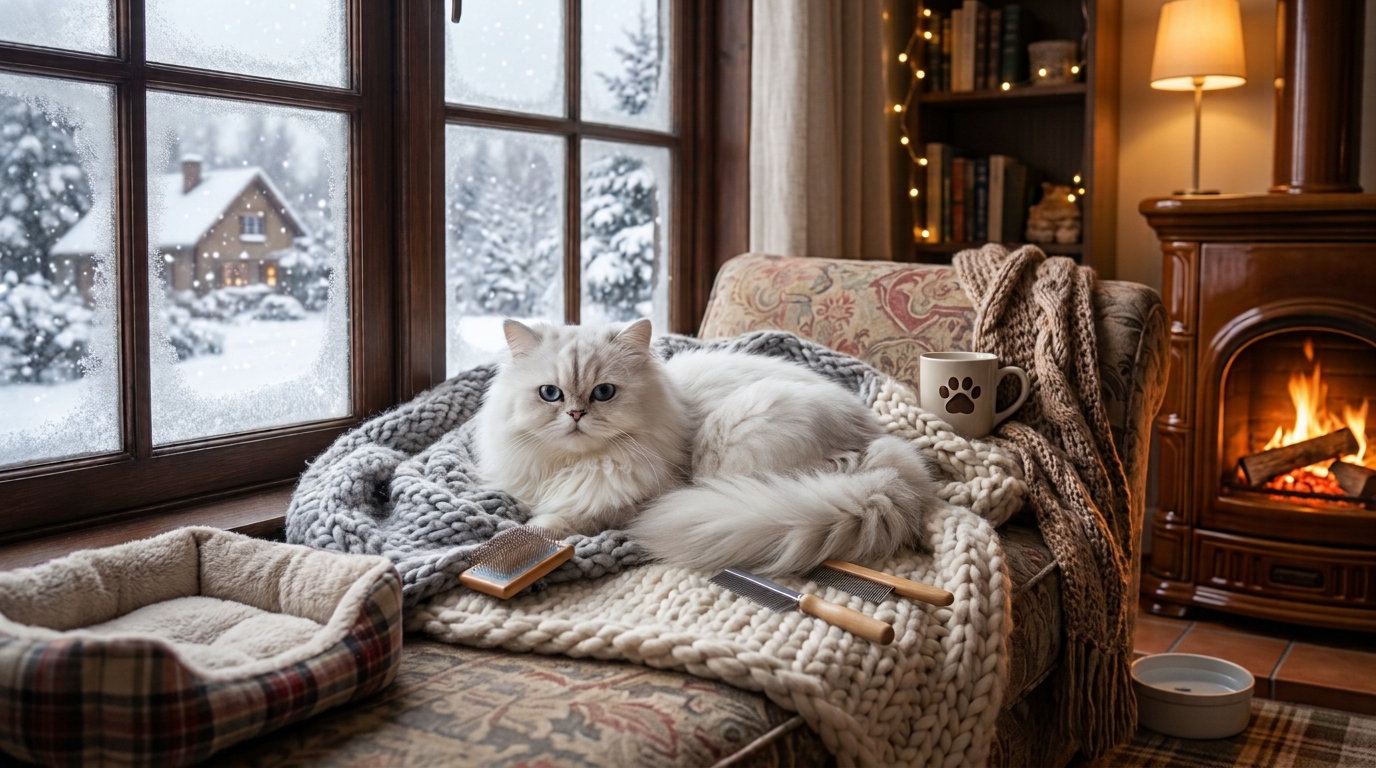
Quick Answer: How Do You Care for a Persian Cat in Winter?
To care for a Persian cat in winter, brush the coat daily to prevent mats, bathe less often and dry the coat completely, keep indoor humidity between 40 and 50 percent, encourage water intake with fountains and wet food, clean the eyes every day, and keep heating sources safe. Schedule a vet check before the coldest months arrive.
Why Winter Is Harder on Persian Cats
Persian cats are among the most loved breeds in the world. Their soft, flowing coats, round faces, and calm temperaments make them popular companions. Those same features make winter a challenge. A Persian’s dense coat can trap moisture and tangle quickly. Its flat face affects breathing, eating, and tear drainage. And the warm, dry air from indoor heating can cause problems that owners don’t notice until they become serious.
Many owners assume that thick fur means their cat doesn’t need extra help in cold weather. The coat does insulate, but for most Persians the bigger winter risks happen indoors. Three things change at once:
- The air gets drier. Forced-air heating and radiators can push indoor humidity below 30 percent, which dries out skin and irritates the eyes and nasal passages.
- Your cat moves less. Many Persians spend winter days on warm windowsills, radiator beds, or your lap, which can lead to gradual weight gain.
- Drinking habits shift. Cats naturally drink less in cold weather, and dehydration puts strain on the kidneys and urinary tract.
Good winter care is less about one big change and more about many small adjustments made consistently.
Understanding the Persian Coat in Cold Weather
A Persian’s coat has two layers: a soft, dense undercoat that holds warmth close to the skin, and a longer outer coat of guard hairs. When the undercoat is healthy, it traps air and insulates well. When it becomes matted, greasy, or full of dead hair, it loses that ability. Mats can also pull on the skin and, in severe cases, cause sores.
Winter makes matting more likely for three reasons. Dry skin produces more dander and loose hair. Static electricity makes the outer coat stand up and snag. And less activity means less natural grooming, so dead hair builds up faster. Mats often form behind the ears, under the front legs, on the belly, in the “britches” (the fur on the back of the hind legs), and at the base of the tail.
The goal is to remove dead undercoat before it knots, not to fight mats after they form.
How to Brush a Persian Cat Properly
Most Persians need a grooming session every day in winter, with a longer session two or three times a week. Use two tools: a wide-toothed metal comb and a slicker brush. Start with the comb, which reaches down to the undercoat and catches tangles a brush might miss. Then use the slicker brush to smooth the outer coat and lift loose hair.
Work in small sections. Part the fur with your fingers, comb down to the skin, then move on. Focus on the trouble spots listed above.
If you find a knot, don’t pull. Hold the base of the knot close to the skin with your fingers, then gently work the tip apart with the comb. For large or tight mats near the skin, a professional groomer is the safer choice. Cutting into a mat with scissors is one of the most common ways owners injure their cat’s skin.
Keep sessions short at first, five to ten minutes, and finish with a treat or gentle petting. Many Persians come to enjoy grooming once it’s a predictable routine in the same warm spot.
For more guidance, see our guide to grooming a long-haired cat at home and our tips on getting rid of mats in your cat’s fur.
How Often Should You Bathe a Persian Cat in Winter?
Most Persians need a bath every four to six weeks. Some cats with heavy oil production need more frequent washing, and some with dry skin need less. Many owners cut back on baths in winter to avoid chilling the cat, but the real risk is incomplete drying. A Persian that goes to bed with a damp undercoat is far more likely to get chilled or develop skin problems.
If you bathe your cat in winter:
- Use lukewarm water and a gentle shampoo made for sensitive skin.
- Keep the room warm and free of drafts.
- Rinse thoroughly, since leftover shampoo can irritate skin.
- Squeeze out excess water with a towel rather than rubbing.
- Dry with a pet-safe hair dryer on the lowest heat and airflow setting, keeping it a hand’s width from the skin and moving constantly.
- Stop only when the undercoat is fully dry, not just the surface.
- Brush gently while drying to prevent felting.
Waterless shampoos can help with surface grease between baths but don’t replace a proper wash. If your cat strongly resists water, a groomer experienced with long-haired breeds is worth the cost.
Why Indoor Humidity Matters for Persian Cats
Humidity is one of the most overlooked winter factors for Persian owners. Cats do best at a relative humidity of about 40 to 50 percent. When winter heating drops that toward 20 or 30 percent, several problems can follow:
- Skin becomes dry and flaky.
- The coat loses natural oils and gains static.
- Nasal and eye membranes dry out, which can increase sneezing and eye discharge.
- Flat-faced cats, which already have less efficient airways, may find breathing more irritating.
A basic digital hygrometer costs little and tells you the humidity in the room where your cat spends the most time. If readings stay low, a cool-mist humidifier is the most practical fix. Clean it regularly, since standing water can grow bacteria and mold. Keep it out of reach, and don’t place it so that your cat gets a direct blast of mist.
Houseplants add only a small amount of moisture and aren’t a reliable fix on their own.
How to Keep a Persian Cat Hydrated in Winter
Cats evolved from desert animals and have a weak thirst drive, and many drink even less in winter. Dehydration thickens urine and raises the risk of urinary crystals and blockages. It’s also a serious concern for cats with kidney disease, which is common in older Persians.
The most effective strategy is to add moisture to the diet. Wet food is roughly 70 to 80 percent water, compared with about 10 percent for most dry kibble. Adding wet food or a little warm water to meals can make a real difference.
Other ways to encourage drinking:
- Use a water fountain. Many cats prefer moving water. You can compare options in our guide to choosing a cat water fountain and our top-tested water fountain picks.
- Place bowls in several spots. Keep them away from the litter box and feeding area, since cats often avoid drinking near where they eliminate or eat.
- Choose wide, shallow bowls. Flat-faced cats can find deep, narrow dishes awkward.
- Pick ceramic or stainless steel. Plastic can hold odors and sometimes irritate skin around the chin.
How to Check a Cat’s Hydration at Home
Gently lift the skin at the back of the neck. In a well-hydrated cat, it snaps back quickly. A slow return, dry gums, lethargy, or reduced urination means you should call your vet promptly.
Also watch the litter box. Small or clumped urine, or a cat straining without producing much, is an emergency, especially in male cats. Don’t wait to see whether it resolves.
For more on this topic, read our guide to high-moisture cat food for dehydration.
Feeding a Persian Cat in Winter
Some owners increase portions in winter, assuming the cat needs extra calories to stay warm. For most indoor Persians, this leads to weight gain rather than better health. A warm home and less activity usually mean calorie needs are similar to summer or slightly lower.
Measure food rather than free-feeding, start with the feeding guidelines on the packaging, and adjust based on body condition. To check, feel the ribs with light pressure. You should be able to feel them without seeing them clearly, and there should be a visible waist behind the ribs. Long fur can hide weight gain, so rely on touch. If your cat is gaining weight, ask your vet for a target amount, and consider scheduled meals.
Winter is also a good time to review diet quality. A complete and balanced cat food supports skin and coat health. Some owners consider omega-3 supplements for the coat, but discuss these with your vet first, since the wrong product or dose can cause problems. Never give human foods or supplements without guidance, and avoid onion, garlic, and xylitol, which are harmful to cats.
If your Persian is prone to hairballs, regular brushing is the best prevention, because it removes loose hair your cat would otherwise swallow. Frequent hairballs, or retching without producing one, deserve a vet visit.
For breed-specific food options, see our roundup of the best cat food for Persian cats.
Eye and Face Care for Persian Cats
The Persian’s flat face is part of its appeal, but it also brings health considerations. Tear ducts in many Persians drain less efficiently, so tears can spill onto the face and stain the fur. Dry winter air can make the eyes more irritated and increase discharge.
Daily Eye Cleaning Routine
Clean the eyes every day. Use a soft cloth or cotton pad dampened with warm water or a vet-approved eye wipe. Wipe from the inner corner outward, using a clean section for each eye. Don’t use human eye drops or household products on your cat’s eyes.
Check the eyes daily for warning signs: redness, squinting, cloudiness, swelling, or thick discharge. These can point to infection or a more serious problem and need prompt veterinary attention.
Nose, Mouth, and Breathing Checks
Keep the nose and mouth area clean and dry. Facial folds can trap moisture and debris, which may irritate skin in dry conditions. Look for odor, redness, or sores that don’t heal.
Mild snoring can be normal in flat-faced cats, but loud or labored breathing, open-mouth breathing, or unusual tiredness after light activity should be checked by a vet. Keep the home at a comfortable temperature, since flat-faced cats can struggle to cool themselves.
For a related product pick, see our review of the best tilted cat bowl for flat-faced cats.
Keeping a Persian Cat Warm and Safe Indoors
Persians usually find their own warm spots. You can support that instinct by providing a soft, draft-free bed away from exterior doors and windows. A covered or cave-style bed helps retain body heat.
Heating products can help, but use them carefully:
- Choose heated beds or pads designed for pets, set to a low temperature.
- Make sure the cat can move away from the heat.
- Check cords regularly and keep them out of chewing reach.
- Never use electric blankets or heating pads made for people.
- Keep your cat away from space heaters, fireplaces, and open flames.
- Watch that radiators don’t get hot enough to burn fur or paws.
Long fur can catch fire more easily than many owners expect, so keep heat sources at a safe distance. Replace damp bedding promptly, since damp bedding is a common cause of chill and skin irritation.
Winter Hazards Every Persian Owner Should Know
Winter hazards are not limited to outdoor cats.
- Antifreeze is highly toxic to cats, and even small spills can be fatal. Clean spills immediately and store products in closed containers.
- Ice melt and de-icing salts can irritate paws and cause stomach upset if licked. Wipe your cat’s paws after it comes in from outside, and choose pet-friendly de-icers when possible.
- Lilies are extremely toxic to cats, even in small amounts. Keep them out of the home if you have a cat.
- Tinsel, ribbon, and small ornaments can cause dangerous blockages if swallowed.
- Electrical cords, including those for holiday lights, should be secured out of reach.
Many experts recommend keeping Persians indoors year-round. Their long coats don’t handle wet cold well, and a damp coat in freezing weather is a real risk. If your cat goes outside, keep it supervised and bring it back to a warm, dry space.
Keeping a Persian Cat Active in Winter
Less activity in winter can lead to weight gain, boredom, and behavior problems. Two or three short play sessions of about ten minutes each, using wand toys, feather teasers, or puzzle feeders, can keep your cat engaged. Rotate toys every few days. Many Persians prefer gentle play to high-energy chasing, so follow your cat’s lead.
Create a spot near a sunny window or a low window perch where your cat can watch birds and soak up warmth. Puzzle feeders are another good option, since they turn mealtime into activity. For ideas, see our guides to the best puzzle feeders for cats and cat puzzle toys for mental stimulation.
Winter Vet Checkups and Health Monitoring
A winter veterinary visit is a good idea, especially for older Persians. A vet can check weight, teeth, heart and lungs, eyes, skin, and coat. They can also screen for breed-associated conditions, including polycystic kidney disease, which is hereditary and more common in Persians. Blood and urine tests can catch kidney, thyroid, and other changes before obvious symptoms appear.
Dental health needs regular attention. Persians can be prone to dental crowding and gum disease, and winter indoor routines can make oral problems easier to miss. Red or swollen gums, unusually strong bad breath, drooling, or difficulty eating are reasons to see a vet.
Keep vaccinations and parasite prevention current as recommended by your vet. Indoor cats can still be exposed to parasites through shoes, clothing, and other animals.
For more on keeping your cat healthy, see our article on dental care for cats.
Persian Cat Winter Care Checklist by Month
Because winter lasts several months, a simple schedule helps. Adjust the timing for your climate and how cold your home gets.
Late Autumn (Before Heating Runs Regularly)
Do a full grooming session and, if needed, a careful bath and dry. Check humidity and set up a humidifier if the air is already dry. Make sure the bed is away from drafts. Book a vet check if one is due.
Mid-Winter (Coldest Months)
- Brush daily and check mat-prone areas.
- Clean the eyes daily and check for discharge.
- Keep water fountains and bowls fresh and track daily intake.
- Monitor body weight and adjust portions.
- Inspect heating products and cords weekly.
Late Winter
Keep up regular grooming, since Persians often shed heavily as the season changes. Brush a bit more often during this shedding period. Check skin for dryness and adjust humidity. Increase play and enrichment as daylight returns.
Throughout the Season
Note changes in appetite, energy, litter box habits, or behavior, and bring them to your vet if they persist.
Common Persian Winter Problems and Fixes
Dry, Flaky Skin
Check humidity first. Use a humidifier, bathe less often, and make sure the diet includes enough fat and moisture. If flakes persist, or the skin is red or sore, see a vet, since parasites and dermatitis can look similar.
Static and a Dull Coat
Daily brushing, moderate humidity, and good nutrition usually help. Avoid harsh products and frequent bathing.
Mats That Keep Coming Back
Increase grooming frequency, focus on trouble spots, and ask a groomer about trimming the sanitary area and feet, which mat and collect debris easily. For a brush recommendation, see our guide to the best deshedding brush for long-haired cats.
Sneezing or Nasal Irritation
Check humidity and look for dust, heating system debris, and cleaning product fumes. Colored or thick discharge, or sneezing that won’t stop, needs a vet visit.
Reduced Appetite or Lethargy
These are never normal in any season. A cat that stops eating for more than a day or two needs prompt veterinary care, because cats can develop serious liver problems when they stop eating.
Litter Box Changes
Frequent trips, straining, blood in the urine, or crying while urinating are emergencies, especially in males.
Frequently Asked Questions About Persian Cat Winter Care
Does a Persian cat need a sweater in winter?
Most indoor Persians don’t need clothing because their coat insulates well and they can move to warmer spots. Sweaters can trap moisture and cause problems if they get wet or stay on too long. Only use one if your vet recommends it for a specific reason, and check the skin underneath regularly.
How often should I bathe a Persian cat in winter?
Every four to six weeks is a common starting point. Bathe only when needed, and dry the coat completely each time.
Can a Persian cat get too cold indoors?
Yes, especially in rooms with drafts or where heating is turned down at night. Signs include shivering, a hunched posture, and cold ears or paws. Move the cat to a warmer, draft-free spot and check in with a vet if it persists.
Why is my Persian sneezing in winter?
Dry air is a common cause, and so is dust from heating systems. Frequent sneezing, discharge, or eye problems should be checked by a vet.
Is a humidifier safe for cats?
Yes, if it’s clean and out of reach. Use filtered or distilled water when possible, clean the tank regularly, and avoid placing the unit where your cat gets a direct blast of mist.
How much water should a Persian cat drink in winter?
Needs vary with diet and size. Wet food supplies much of the moisture, so a cat eating mostly dry food will need to drink more. If you’re unsure, or if your cat is drinking much more or much less than usual, speak with your vet.
Do Persians need a different diet in winter?
Usually not. Keep portions measured, prioritize complete and balanced food, and add wet food to support hydration. Adjust for weight rather than the season.
Final Thoughts
Caring for a Persian in winter comes down to consistent attention. Daily brushing protects the coat. Careful bathing and thorough drying prevent chills and skin problems. Balanced humidity keeps skin, eyes, and airways comfortable. Encouraging water intake protects the kidneys and urinary tract. Daily eye care keeps the face clean. And a safe, warm, enriched home keeps your cat active and content.
Your Persian can’t tell you when its skin is dry or its coat is tangling, but it will show you through changes in behavior. Learn what’s normal for your cat, and treat any change as a signal to pay attention. When in doubt, call your veterinarian.
With a little planning and daily care, your Persian can enjoy winter comfortably, with a glossy coat and good health until spring.
Helpful Next Reads on CatVia
- Persian cat summer care tips
- How to take care of a cat during cold weather
- How to protect cats from cold weather
- How to take care of a long-haired cat
- Tips for helping outdoor cats in winter
- Senior cat care guide
Sources and Further Reading
- American Veterinary Medical Association: pet owner resources
- Cornell Feline Health Center
- ASPCA cat care guidance

His professional interests include humane education, ethics, small animal behavior, and veterinary. As a pet lover from school life, having grown up with two cats and a dog. If he isn’t spending time with his friends and family, Justin enjoys traveling. Learn more about Justin here.