Quick Answer: What Is the Difference Between a Persian and a Himalayan Cat?
A Himalayan cat is a colourpoint Persian. It has the same long, dense coat, rounded head, and flat face as a Persian, but it carries the pointed colour pattern and deep blue eyes inherited from Siamese ancestry. Whether the two are separate breeds depends on the registry. The Cat Fanciers’ Association (CFA) treats the Himalayan as a colour division of the Persian, while The International Cat Association (TICA) lists it as its own breed. Day-to-day care is almost identical, so most new owners should choose based on looks, temperament, and the health of the specific kitten.
Why These Two Breeds Are So Easy to Confuse
The confusion starts with history. In the 1930s and 1940s, breeders in the United States and Britain began crossing Siamese and Persian cats to add pointed colour to long-haired cats. Marguerita Goforth is credited with pushing the Himalayan toward recognition, and the Cat Fanciers’ Association accepted it as a breed in 1957.
The two breeds then took different paths. According to a 1985 account in Cat Fancy magazine, the CFA combined the Himalayan with the Persian as a colour division effective February 20, 1984, and many breeders at the time felt this was a major change. Other registries kept the Himalayan as a separate breed, which is why you may see the same cat listed under different names depending on the association.
For a buyer, the practical point is simple. A kitten’s registration papers tell you which organisation recognises it, but they don’t change how the cat will need to be groomed, fed, or checked by a vet. If you plan to show your cat, the rules of the organisation you join will matter. If you only want a companion, focus on the kitten’s health and temperament.
Comparison at a Glance
The table below summarises the most important differences. The points that matter most for daily life are the coat pattern, eye colour, and health screening, since care needs overlap so closely.
| Feature | Persian | Himalayan |
| Origin | Long-established breed from Persia and Europe, refined in the US and UK | Developed from Persian and Siamese crosses in the 1930s to 1950s |
| CFA classification | Persian breed | Colour division of the Persian |
| TICA classification | Persian breed group | Separate breed |
| Coat pattern | Solid, shaded, smoke, tabby, bi-colour and more | Colourpoint: darker face, ears, paws and tail on a lighter body |
| Eye colour | Copper, green, blue, or mixed in some patterns | Typically deep blue |
| Coat care | Daily combing, bathing every 4 to 6 weeks | Same as Persian |
| Main health concerns | PKD, flat-face breathing, tear overflow, dental crowding | Same as Persian, plus facial dermatitis seen in both breeds |
| Commonly cited lifespan | About 12 to 15 years | About 12 to 15 years |
Appearance: Face, Body, and Coat
Both breeds have a cobby, low-to-the-ground body with short legs, a broad chest, and a round head. Both have a short, snub-nosed face. The coat is long, thick, and flowing, with a dense undercoat. From a distance, a Persian and a Himalayan can look almost identical, and many people only notice the difference when the cat’s colour is clearly pointed.
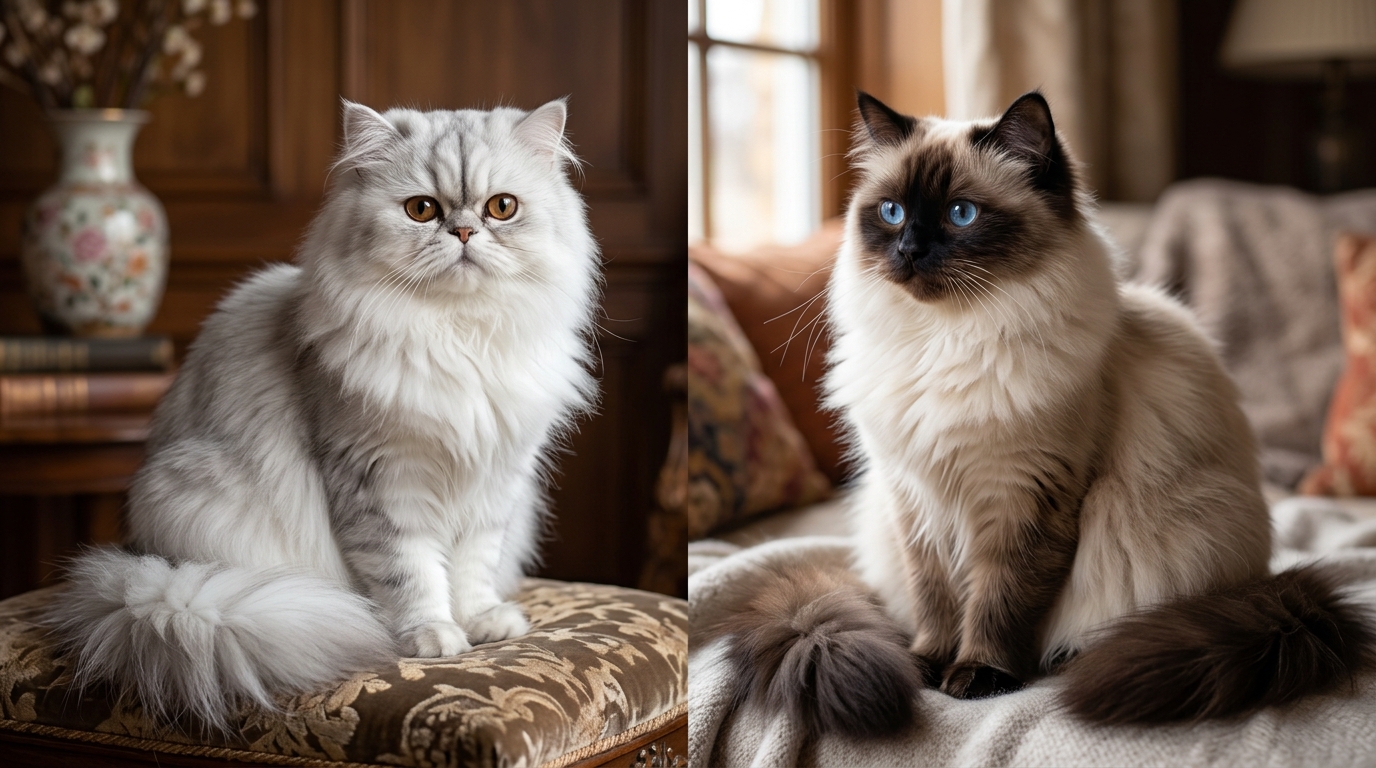
The defining feature of the Himalayan is its colourpoint pattern. The body is lighter, while the face, ears, paws, and tail are darker. Common point colours include seal, blue, chocolate, lilac, red, cream, and tortie points. The pattern comes from a gene linked to Siamese ancestry that responds to temperature. Cooler parts of the body produce darker fur, which is why the points are most intense on the extremities. You may notice a Himalayan’s points look slightly darker in winter, especially if the cat spends time in cooler rooms or near a window.
The Persian coat comes in a much wider range of colours and patterns. Solid, shaded, smoke, tabby, parti-colour, calico, and bi-colour coats are all recognised. Persians are a good choice if you want a cat with a traditional look or a specific colour that isn’t pointed.
Eye colour is another visible difference. Himalayans are typically deep blue, a trait inherited from their Siamese ancestry. Persians can have copper, green, or blue eyes, and some colour patterns produce mixed eye colours. If you want a cat with blue eyes but not a pointed coat, a blue-eyed Persian may be an option, though eye colour depends on coat colour and genetics.
A Note on Size
Both breeds are medium-sized, sturdy cats. Adult weights commonly fall in a similar range, and the difference between individual cats is usually larger than the difference between the breeds. Sex, diet, and body condition matter more than breed when it comes to size, so judge each cat individually rather than assuming a Himalayan will be bigger or smaller.
Coat Care: The Same Routine for Both Breeds
Coat care is the area where the two breeds are most alike, and it is also the most demanding. Both need daily combing to prevent mats, especially behind the ears, under the front legs, on the belly, and at the base of the tail. Both need a bath every four to six weeks, with careful drying afterward. Both shed heavily during seasonal changes.
If you already have a grooming routine for a Persian, it will work for a Himalayan. Start with a wide-toothed metal comb to reach the undercoat, then use a slicker brush to smooth the outer coat. Keep sessions short, and finish with a treat so the cat learns that grooming is pleasant. For a detailed walkthrough, see our guide to grooming a long-haired cat at home.
Shedding is a fact of life with both breeds. Neither is a good match for owners who want a low-shedding cat. For tools that help with loose undercoat, see our best deshedding brush for long-haired cats. If your cat hates being brushed, a grooming glove can make sessions easier.
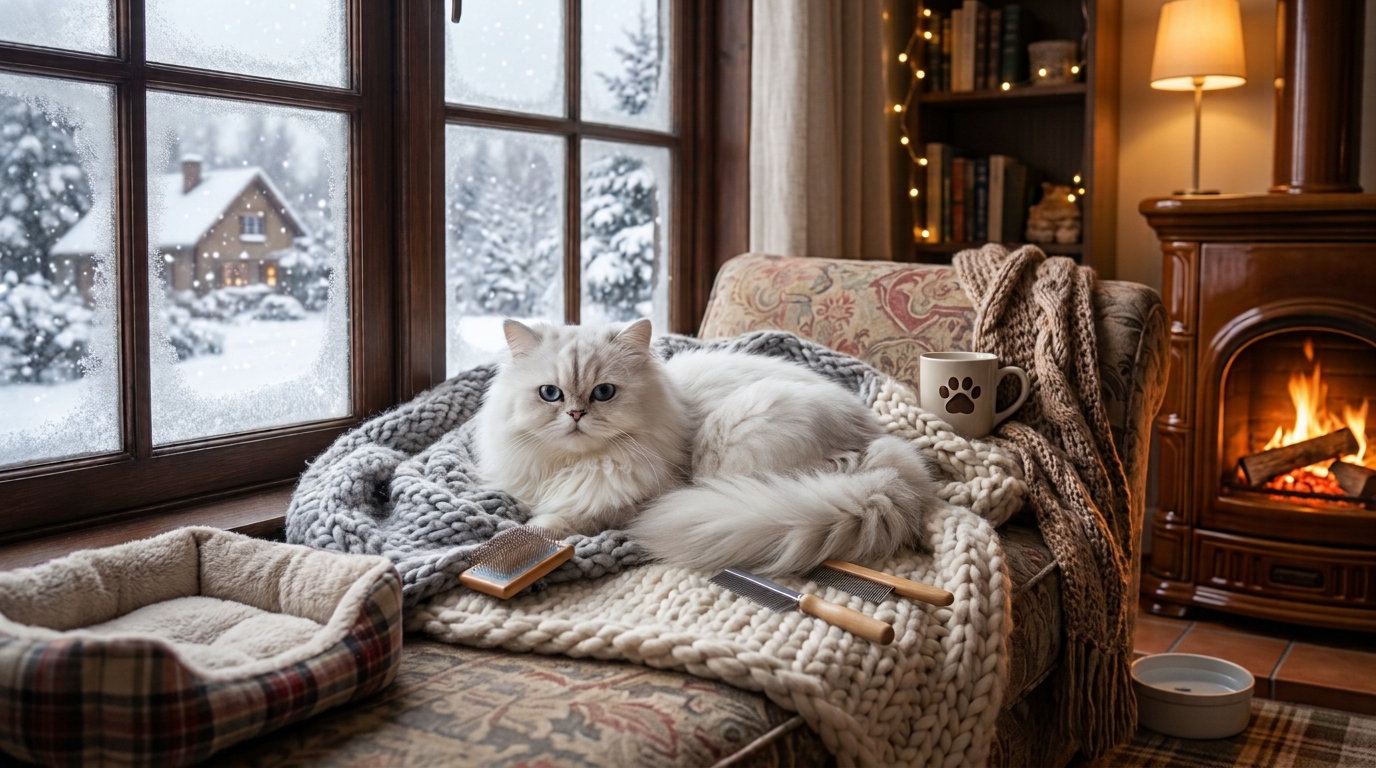
Bathing follows the same rules for both. Use lukewarm water and a gentle shampoo made for sensitive skin, rinse thoroughly, and dry the coat completely before the cat settles down. A damp undercoat can lead to chills and skin problems, which is especially important for owners who live in cold climates.
Temperament: What to Expect From Each Breed
Persians and Himalayans are both widely described as calm, affectionate, and happy to spend the day near their owners. Many are content lap cats and do well in quiet homes. Both are generally less active than breeds such as Abyssinians or Bengals, and both usually prefer short, gentle play sessions to long periods of chasing.
Some owners describe Himalayans as slightly more playful, with occasional bursts of energy, and attribute this to their Siamese ancestry. Other owners describe Persians as calmer and more reserved. These observations are based on personal experience rather than controlled research, and they vary widely from cat to cat. Individual personality, early socialisation, and the home environment usually matter more than breed.
When you meet a kitten, spend time with the litter and watch how the kittens interact with people and with each other. A confident, curious kitten who approaches you calmly is usually a better sign than the colour of its coat. Ask the breeder how the kittens are handled from an early age, and whether they have been exposed to household sounds, other animals, and being picked up.
Health: Shared Risks You Need to Know
Because the Himalayan is derived from Persian lines, it inherits most of the same health concerns. Understanding these before you buy is one of the most important steps you can take, and it is a far better guide to long-term welfare than any difference in appearance.
Polycystic Kidney Disease (PKD)
Polycystic kidney disease is a hereditary condition that causes fluid-filled cysts to develop in the kidneys. It is more common in Persians and related breeds, and it can affect Himalayans as well. Cats with PKD may show no symptoms early on, which is why genetic testing matters. Reputable breeders test breeding cats for the PKD gene mutation and can show you the results for both parents. A DNA test is available, and you should ask for it before you buy.
Flat-Face Breathing Problems
Both breeds are brachycephalic, meaning they have short, flattened skulls. This shape can lead to breathing difficulties, including narrowed nasal passages and an elongated soft palate. Warning signs include loud or labored breathing, open-mouth breathing, snoring that gets worse over time, and tiring quickly during light activity. Keep the home cool, avoid overheating, and see a vet promptly if breathing becomes a concern.
Eye and Tear Problems
Many flat-faced cats have tear ducts that don’t drain efficiently, so tears spill onto the face and can stain the fur. Eye discharge can also be linked to irritation from dry winter air. Clean the eyes daily with a soft cloth or a vet-approved eye wipe. Redness, squinting, cloudiness, or thick discharge should be checked by a vet. For a product that helps with feeding without strain on the face, see our review of the best tilted cat bowl for flat-faced cats.
Facial Dermatitis
Idiopathic facial dermatitis is a skin condition seen in Persians and Himalayans, with redness, crusting, and hair loss around the face. Its cause is not fully understood. Owners should watch for skin changes around the nose and eyes and bring them to a vet for diagnosis, since several other skin conditions can look similar.
Dental Crowding
Flat-faced cats often have crowded teeth, which can trap food and bacteria and lead to gum disease. Regular teeth checks, appropriate dental care, and routine vet exams help catch problems early. For guidance, see our article on how to provide proper dental care for your cat.
Lifespan
Commonly cited lifespans for both breeds are about 12 to 15 years, though individual cats can live longer with good care. Lifespan depends heavily on genetics, weight, dental and kidney health, and how early problems are caught. Regular vet visits make a bigger difference to longevity than breed alone.
Cost and Buying From a Breeder
Prices for both breeds vary a great deal by region, breeder reputation, lineage, and whether the kitten is sold as a pet or for show. Himalayan kittens are sometimes priced differently from Persian kittens, but you should not judge a breeder by price alone. A low price can be a warning sign if health testing has been skipped.
A good breeder will be open about health and genetics. Ask whether both parents were tested for PKD and can provide the results. Ask about other health checks, vaccinations, and whether the kitten has been examined by a vet before going home. Ask to see the kitten’s environment, and whether the mother is kept in a clean, calm space. Be wary of breeders who won’t let you visit, who offer kittens without papers, or who pressure you to decide quickly.
Adopting from a rescue or shelter is another option. Persian and Himalayan cats do turn up in rescues, and adult cats often have established personalities that are easier to predict. Check the shelter’s health records and ask about any known medical history.
Daily Life: Which Breed Suits Your Home?
Both breeds are best suited to indoor life. Their flat faces make them more sensitive to heat, and their long coats make them vulnerable to matting and damp weather. An indoor home with a quiet space, regular grooming time, and a comfortable temperature is ideal for either breed.
Both do well with patient owners who can spend time on daily care. If your schedule is busy, plan for at least ten to fifteen minutes of grooming each day, plus time for eye cleaning and a check of the coat and skin. Households with children may find both breeds calm and tolerant, but any cat should be supervised around young children, and both should have a quiet retreat.
For a Persian, a traditional look and a wider range of colours may be the better fit. For a Himalayan, the pointed coat and blue eyes give a distinctive appearance, and the same care routine applies. If you want a particular colour, check which breed or variety offers it before you commit.
If you rent or live in an apartment, both breeds can be good companions because they tend to be calm indoors. Look for a home with space for a cat tree or window perch, so the cat has a warm, comfortable place to rest. For ideas, see our article on the best cat tree for small apartments.
How Their Food and Feeding Needs Compare
Both breeds have the same general nutritional needs as other adult cats. They need complete and balanced food, good protein, and enough moisture in the diet. Their flat faces can make eating from deep bowls awkward, so wide, shallow dishes are often more comfortable. Many owners find that a tilted bowl or a slightly raised dish helps with feeding.
Weight management matters for both breeds. Because they are calm and often prefer resting, both can gain weight easily. Measure meals, check body condition regularly, and talk to your vet before changing portions. For breed-specific food ideas, see our roundup of the best cat food for Persian cats, which many owners also use for Himalayans.
Common Myths About Persians and Himalayans
Several myths circulate among cat owners about these two breeds. Clearing them up can help you make a decision based on facts rather than marketing.
Myth: A Himalayan is a different species or a hybrid with Siamese
Himalayans are domestic cats, not hybrids with another species. They were developed through selective breeding that combined Persian coat type with Siamese colour patterns. Once the breed was established, breeders selected for the Persian body type and long coat, which is why a modern Himalayan looks much more like a Persian than a Siamese.
Myth: Blue-eyed cats are always deaf
Blue eyes are linked to white coat patterns in some cats, and white cats with blue eyes can have hearing problems. Himalayans have blue eyes because of their colourpoint gene, not their white markings, and hearing problems are not a defining feature of the breed. Any owner concerned about hearing should discuss it with a vet, particularly if the cat seems unresponsive to sounds.
Myth: Persians and Himalayans can be left alone for long periods
Both breeds are calm, but they are not low-maintenance pets. Daily grooming, eye cleaning, and regular vet visits are required. A cat left alone for long periods with no grooming is at higher risk of matting, eye problems, and skin irritation.
Myth: Shorter-faced cats don’t need a vet check
Flat-faced cats often need more vet attention than other breeds, not less. Breathing, dental, and eye concerns can develop quietly, so routine checks are especially valuable.
Your First Month With a Persian or Himalayan Kitten
The first few weeks set the tone for a lifetime of good grooming and health habits. Bring the kitten home to a quiet room with a bed, litter tray, water, and food already in place. Let the kitten explore at its own pace, and avoid overwhelming it with visitors or noise during the first days.
Start grooming early, even if the coat is short at first. Spend a few minutes each day combing the kitten and handling its paws, ears, and face. This makes the routine feel normal when the coat grows. Begin eye cleaning the same way, using a soft cloth and warm water.
Schedule a vet visit within the first week or two. Ask about vaccinations, parasite prevention, a baseline check of the eyes, teeth, and breathing, and whether PKD testing has been done. Keep a simple record of weight, appetite, litter box habits, and any changes, so you can spot problems early.
Pay attention to feeding. Kittens need a food formulated for growth, and the transition to adult food should be made gradually under the guidance of your vet. Offer wet food to support hydration from the start, and choose a shallow, wide bowl that suits a flat face.
Frequently Asked Questions
Is a Himalayan a separate breed from a Persian?
It depends on the registry. The CFA treats the Himalayan as a colour division of the Persian, while TICA lists it as a separate breed. Both organisations recognise the cat, but the rules for showing and registering differ, so check with the association you plan to join.
Are Himalayans and Persians the same cat?
They are very similar in body type, coat, and care needs. The main visible difference is the pointed colour and blue eyes of the Himalayan. Both are flat-faced, long-haired cats that need daily grooming and careful health monitoring.
Do Himalayans have more energy than Persians?
Some owners think so, but the evidence is anecdotal. Individual personality varies more than breed, so spend time with the specific kitten before deciding.
Are Himalayans or Persians hypoallergenic?
No cat is truly hypoallergenic. Both breeds shed, and both produce the proteins that trigger allergies. People with allergies should spend time with a cat before committing, and regular grooming and bathing can reduce allergens in the home, though it won’t remove them entirely.
Do Himalayans need different food or care than Persians?
No. Their diet, grooming, bathing, and eye care routines are the same. Choose a complete and balanced cat food, and adjust portions based on body condition rather than breed.
Does a Himalayan’s colour change over time?
Pointed colour can change slightly with age and temperature. Cats often look darker in cooler areas of the body, and points may lighten or deepen over time. Kittens may also change colour as they mature, so judge the adult colour rather than the kitten colour when choosing.
Can I show a Himalayan with Persians?
This depends on the organisation. In the CFA, the Himalayan is a division of the Persian, so the rules are different from TICA, where it is a separate breed. Check the current rules of the association before entering a show.
Final Thoughts: Choosing the Right Cat for You
The Persian and the Himalayan share a history, a body type, and most of their care needs. The most visible difference is coat colour: Persians come in many patterns, while Himalayans are colourpoint with blue eyes. Temperament varies more from cat to cat than from breed to breed, and both breeds carry the same health risks, especially PKD and breathing problems.
Whichever breed you choose, focus on what you can control. Buy from a breeder who tests for PKD and shares health records, or adopt from a reputable rescue. Commit to daily grooming, eye care, and regular vet checks. Plan for a calm, indoor home with a cool, comfortable space. With that foundation, either cat can be a loving companion for more than a decade.
If you already have a Persian or are considering a winter care routine, our Persian cat winter care guide covers grooming, humidity, hydration, and eye care in more detail. The same advice applies to Himalayans.
Helpful Next Reads on CatVia
- Best cat food for Persian cats
- Persian cat summer care tips
- How to take care of a long-haired cat
- Guide to grooming a long-haired cat at home
- Best cat food for Siamese cats
Sources and Further Reading

His professional interests include humane education, ethics, small animal behavior, and veterinary. As a pet lover from school life, having grown up with two cats and a dog. If he isn’t spending time with his friends and family, Justin enjoys traveling. Learn more about Justin here.