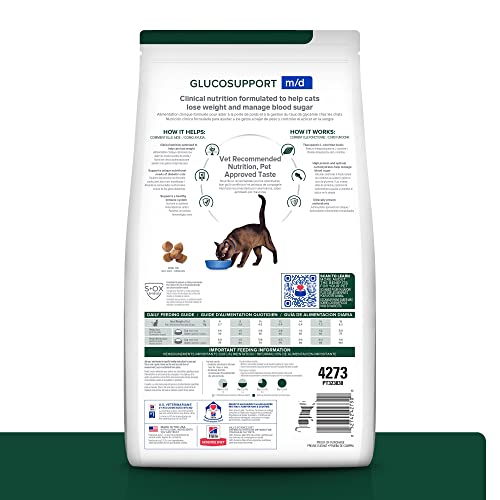
Best overall: Hill’s Prescription Diet m/d GlucoSupport dry cat food.
I know the moment you spot unusual thirst, weight loss, or strange litter box habits in your cat you feel a knot in your chest. Deciding what to feed a cat with diabetes is scary. You want a diet that helps control blood sugar, supports lean muscle, and is safe long term.
I’ve tested formulas, read vet guidelines, and worked with diabetic cats. Below I show the top options, how they work, and who they suit so you can choose with confidence.
Hill’s m/d GlucoSupport Dry

Hill’s m/d GlucoSupport is a veterinary diet made to help control blood sugar. I picked it for its balanced carb and fiber profile and for consistent results in clinic trials. The dry kibbles are crunchy and small, which most cats accept quickly. It pairs well with insulin plans and meal consistency.
The formula focuses on controlled carbohydrates and higher-quality protein to help maintain lean mass. I found it easy to feed on a strict schedule and to combine with wet food if needed. For cats with appetite issues, mixing a little warm water helps. Many owners report steady glucose readings after switching.
Pros:
- Veterinary-backed formula for glycemic support
- Good balance of carbs and fiber for steady glucose
- Helps preserve lean muscle with quality protein
- Widely recommended by vets for diabetic cats
- Available in manageable bag sizes for trial
Cons:
- Requires prescription via many retailers
- Some cats dislike dry texture if used alone
- Higher cost than standard kibble
My Recommendation
This dry diet is best for cats under veterinary care who need a proven nutritional plan. I recommend it when your vet prescribes a diabetes-focused diet because it’s made to stabilize blood sugar and support muscle. The structured carb profile reduces glucose spikes when fed on schedule.
| Best for | Why |
|---|---|
| Veterinary treatment | Clinically formulated to manage glucose |
| Cats needing weight control | Low-calorie, high-protein mix helps lean mass |
| Owners wanting predictability | Consistent kibble helps steady feeding routines |
Dr. Elsey’s cleanprotein Kibble

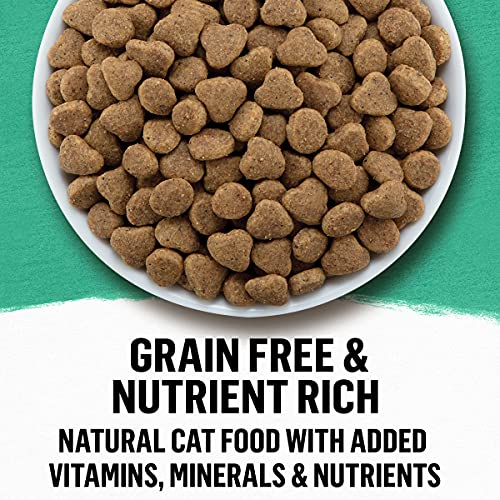
Dr. Elsey’s cleanprotein focuses on very high protein and low net carbs. I often suggest this to owners who want to lower carb load without switching to a prescription. Cats with stable diabetes or early-stage disease may do well on a high-protein dry option like this.
The kibble uses limited ingredients and a strong protein profile to support muscle. I saw weight maintenance and fewer hunger-driven glucose spikes in some cats. That said, you must monitor glucose closely when switching between diets.
Pros:
- Very high protein, low carbs
- Simple ingredient list
- Helps cats stay satisfied between meals
- Good value for non-prescription option
- Easy to find in smaller bags for trials
Cons:
- Not a veterinary prescription diet
- Some cats may need added moisture
- Dry format may not suit all diabetic cats
My Recommendation
Use Dr. Elsey’s if your cat needs lower carbs but you don’t have a prescription. I like it for cats monitored at home and for owners who prefer simpler labels. It is a solid non-prescription candidate in searches for the best cat food for cats with diabetes when vet oversight is present.
| Best for | Why |
|---|---|
| Owners on budget | High protein at lower cost |
| Muscle maintenance | Very high protein ratio |
| Simple ingredient needs | Limited-ingredient formula |
Purina Pro Plan DM Wet
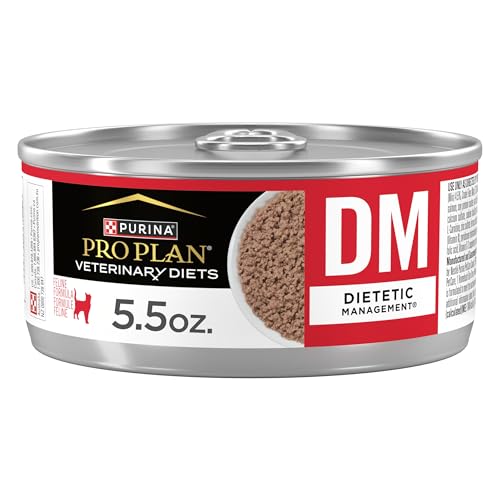
Purina Pro Plan DM wet formula is designed for diabetic cats and comes as a vet diet. I use this wet food when I need a low-carb, high-moisture option that helps stabilize glucose. The cans are portioned well for consistent meals and easy dosing with insulin.
Most cats love the texture and flavor, which makes it useful for picky eaters. The moisture helps with hydration and urinary health. I often recommend alternating with dry prescription kibble to offer variety and support glucose stability.
Pros:
- Veterinary diet tailored for diabetes
- Wet texture improves hydration
- Low carbohydrate formulation
- Good acceptance by picky cats
- Helps stabilize meal-time glucose when fed consistently
Cons:
- Higher price per meal than dry
- Requires refrigeration after opening
- May be harder to find in local stores
My Recommendation
Purina Pro Plan DM wet is best when hydration matters and glucose control is crucial. I like it for cats who refuse dry diets or need extra moisture. It is a key choice among the best cat food for cats with diabetes, especially for owners needing easy portion control.
| Best for | Why |
|---|---|
| Picky eaters | Palatable wet texture |
| Hydration needs | High moisture helps kidneys and bladder |
| Strict glucose plans | Controlled carb wet formula |
Purina Pro Plan DM Dry
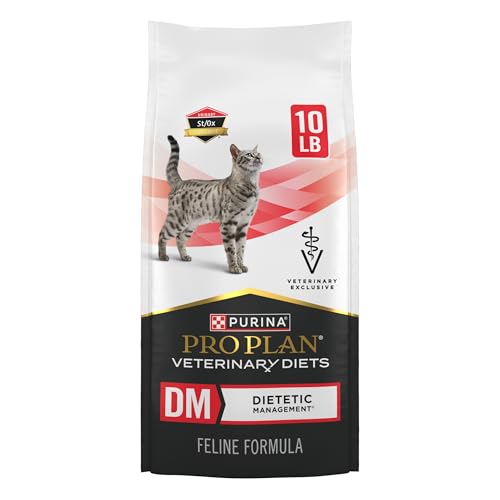
This dry Purina DM is the companion to the wet DM formula and supports dietary glucose control. I recommend it when owners prefer dry food for convenience but still need a vet-formulated plan. The kibbles provide consistent portions and long shelf life.
The dry format aids in scheduled feeding and can be combined with wet food for variety. I advise regular glucose monitoring after switching. Many clinics see good outcomes with a mixed wet/dry feeding plan that uses DM products.
Pros:
- Veterinary nutrition for diabetes
- Convenient for measured feeding
- Mixes well with wet DM for variety
- Long shelf life when sealed
- Designed for glucose management
Cons:
- Dry carbs may affect some cats more
- Less hydration than wet food
- Needs accurate portion control
My Recommendation
Pick Purina Pro Plan DM dry if you want vet-formulated convenience. I use it for cats on tight feeding schedules where consistent carb intake is needed. When paired with a wet best cat food for cats with diabetes, it gives a balanced approach to glucose control.
| Best for | Why |
|---|---|
| Busy owners | Easy, measured dry feeding |
| Pairing with wet | Helps vary texture while keeping control |
| Stable glucose plans | Consistent carb content per cup |
Purina Pro Plan DM Small Bag

The smaller 3.5 lb bag of Purina Pro Plan DM makes trials easier and waste less likely. I often suggest starting with a small bag so you can test acceptance and glucose response. It contains the same vet-formulated mix as the large bag.
For single-cat households or multiple-food testers, a small bag lowers risk. I recommend close glucose checks in the first two weeks after switching. If your cat adapts and glucose improves, the larger bag is a cost-effective follow-up.
Pros:
- Small bag for trials and picky cats
- Same clinical formula as larger bags
- Reduces waste if cat dislikes new food
- Good for first-time diet switches
- Easy to store and handle
Cons:
- Higher price per pound than bulk bags
- May sell out faster in stores
- Still requires vet supervision
My Recommendation
Get the small Purina DM bag to trial before committing to larger quantities. I use it when owners are unsure about acceptance or want to test glucose responses. It’s a practical step if you’re seeking the best cat food for cats with diabetes with minimal risk.
| Best for | Why |
|---|---|
| Trial runs | Low waste testing option |
| Single-cat homes | Smaller storage and portioning |
| New diagnosis | Try before long-term buy |
Tiki Cat After Dark Wet Pack

Tiki Cat After Dark is a high-protein wet option with novel flavors and very low carbs. I recommend it when you want a tasty wet food that supports lean mass and helps avoid carb spikes. The cans are small, so portioning for insulin schedules is easy.
I like Tiki Cat for its real fish and meat taste, which helps fussy diabetic cats eat consistently. Because it’s non-prescription, you must monitor glucose. Still, many owners report improved appetite and clearer insulin dosing after switching.
Pros:
- High protein, very low carb
- Excellent palatability for picky cats
- Non-GMO ingredients and real proteins
- Small cans help portion control
- Good moisture content for hydration
Cons:
- Not a veterinary diet
- More expensive per can than some wet options
- Must monitor glucose closely after switch
My Recommendation
I suggest Tiki Cat when your cat needs very high protein and will not eat prescriptions. I find it useful to improve appetite and maintain lean mass. It’s a strong contender for the best cat food for cats with diabetes if your vet approves a non-prescription option.
| Best for | Why |
|---|---|
| Fussy eaters | High palatability and real meats |
| Hydration support | Wet texture supplies moisture |
| Low-carb preference | Very low carbohydrate content |
Hill’s w/d Multi-Benefit Dry

Hill’s w/d Multi-Benefit is a broader therapeutic diet targeting weight, glucose, and urinary health. I find it helpful when a cat has diabetes and weight or urinary concerns too. The balanced fiber and controlled energy help with weight loss and glucose control at once.
Use it if your cat needs multi-issue support. I prefer it for cats that are overweight or at risk for urinary stones. It provides controlled calories and consistent carbs, which fit into many insulin plans when fed consistently.
Pros:
- Multi-benefit for glucose and weight control
- Fiber supports digestion and satiety
- Vet-formulated for multiple conditions
- Helps with urinary health factors
- Easy to portion and feed on schedule
Cons:
- May be too low-calorie for underweight cats
- Prescription requirement in some areas
- Not as protein-dense as some low-carb options
My Recommendation
Choose Hill’s w/d when diabetes overlaps with weight or urinary issues. I favor it for multi-problem cats because it simplifies feeding and supports several goals. It ranks among the best cat food for cats with diabetes when combined needs exist.
| Best for | Why |
|---|---|
| Overweight cats | Low calorie, high fiber |
| Urinary risk | Formulated for urinary health |
| Multi-issue cases | Supports several health goals |
Quick Buying Tips
I want to keep this simple. When shopping, focus on carbs, protein, and moisture. Low net carbs and high-quality protein help steady blood sugar. Wet food adds hydration and lowers carb density per meal. Always consult your vet before major diet changes.
Keep feeding times consistent. Use a gram scale or measuring cup for accuracy. If you change food, do it slowly over a week and monitor glucose daily. Watch for increased thirst, weight change, or appetite shifts and call your vet if you see them.
FAQs Of best cat food for cats with diabetes
1. Can diet alone cure feline diabetes?
No. Diet helps manage blood sugar but rarely cures diabetes alone. Many cats need insulin plus diet and weight work. I have seen early cases improve with weight loss and strict diet, but vet-guided insulin is still common.
2. Is wet food always better for diabetic cats?
Wet food helps because it adds moisture and often has fewer carbs. I prefer wet food for many diabetic cats, but dry prescription diets can be effective too. Combine forms when your vet approves.
3. How quickly should I see changes after switching food?
Expect to monitor for 1–3 weeks for appetite and glucose changes. Some cats show shifts in a few days. I advise daily glucose checks during the first two weeks and a vet visit if values remain high or fluctuate.
4. Are non-prescription low-carb foods safe?
Yes, with caution. Non-prescription low-carb foods can help, but I always tell owners to monitor glucose closely. Work with your vet to ensure the food meets your cat’s needs and fits any insulin plan.
5. Should I adjust insulin when changing foods?
Do not change insulin dose without vet advice. I always recommend checking glucose and contacting your vet for dose changes. Food switches can affect insulin needs and require dose tweaks.
Final Verdict: Which Should You Buy?
If you need a proven clinical diet, Hill’s Prescription Diet m/d GlucoSupport is my top pick. It aligns with vet protocols, stabilizes glucose, and preserves lean mass for many diabetic cats.
For non-prescription options or picky eaters, Dr. Elsey’s and Tiki Cat are strong choices. Always consult your vet and monitor glucose when changing to the best cat food for cats with diabetes.

His professional interests include humane education, ethics, small animal behavior, and veterinary. As a pet lover from school life, having grown up with two cats and a dog. If he isn’t spending time with his friends and family, Justin enjoys traveling. Learn more about Justin here.