
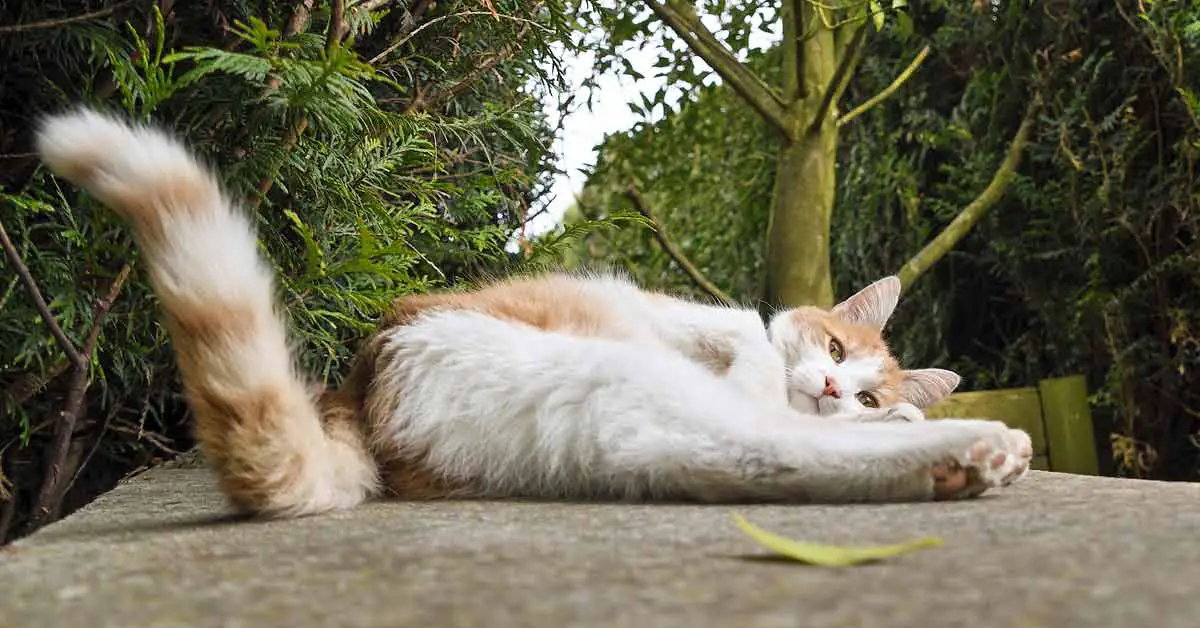
What happens if you pull a cat’s tail? You probably are thinking that pulling a cat’s tail is a very harmful thing to do. But actually this isn’t the fact at all. This could lead to a very consequence.
Uses of the tail
A cat’s tail helps them to balance running after or jumping on prey. Never pull on a cat’s tail. Motivate your children not to do it anymore. Cats can live without tails. Some of them are born without tails. A domestic cat usually holds its tail in a vertical position while walking build cats hold their tails horizontally.
The cat uses their tails to communicate with others through body language which is a great indicator of your cat’s mood. If cats put their tail in the air, it is an invite for the other cat to smell them.
Also Read: Will cats eat their kittens?
Contents of the tail
The cat’s tail is more than only fur and that contains muscle, fat, skin, and extension of the spinal cord. Couples of vertebrae belong there. It goes from cats back to all the way to the tail that carries signals to the brain. 2 main problems happen with the tail:
- A dislocated tail
- Paralysis
Dislocation
This is one of the common problems when a cat’s tail is pulled on is that it becomes dislocated in the tail side. It is very painful for cats and it can’t fix itself.
If a cat’s tail is dislocated, it will hang limply. It depends on the place where the dislocation happened. Swelling and painful to touch is also possible. Get a vet to prevent the tail from getting worse.
Paralysis
Hardly pulling on a cat’s tail may paralyze your cat. It leads to rear paralysis in the body or sometimes the whole body. The brain can’t send signals from the tail to the brain. A pet parent or vet manually helps the cat to go slowly everyday.
Why do cats like their tail pulled?
It is a common misconception that cats enjoy having their tails pulled. In reality, the vast majority of domestic cats find this action painful, frightening, or irritating. Understanding feline anatomy is crucial to ensuring your pet’s well-being and correcting this misunderstanding.
The tail is an extension of a cat’s spine, containing vertebrae, nerves, and muscles. This sensitive appendage serves as a vital tool for balance and communication. Pulling it can cause immediate pain and, in severe cases, lead to nerve damage or even spinal injuries. Because cats cannot verbally tell us to stop, they may resort to biting or scratching to escape the discomfort.
Continue reading: Why does cat chaseown tail?
However, confusion often arises because many cats enjoy being touched near the tail—specifically at the base. This area contains high concentrations of nerve endings and scent glands. A firm scratch or pet at the very top of the tail can be pleasurable and soothing for a cat. An owner might misinterpret this enjoyment as a preference for having the tail itself pulled or tugged.
Additionally, kittens often chase their tails as part of play development. This is a hunting instinct practice, not an indication that the tail is a handle for humans.
Ultimately, respecting a cat’s boundaries is essential. While some tolerant cats may allow handling without a reaction, they rarely enjoy it. To keep your feline friend safe and happy, avoid pulling their tail and stick to petting the head, chin, and back.
Why is my cat’s tail always moving?
A cat’s tail is a sophisticated communication tool and a vital counterbalance. If your cat’s tail seems to be in constant motion, it is rarely random; instead, it provides a window into their emotional state and physical health.
Most tail movement is expressive. A wide, sweeping wag often indicates frustration or deep concentration—similar to how a dog wags, but often with opposite intent. If your cat is staring at a bird outside with a swishing tail, they are likely in “hunting mode.” Conversely, a tail twitching only at the tip suggests mild curiosity or excitement. If the tail is thumping loudly on the floor while you are petting them, it is a clear warning sign that they are overstimulated and want you to stop.
Physiologically, the tail acts as a counterbalance. Even when sitting or lying down, subtle shifts help the cat maintain their center of gravity and readiness to spring into action.
However, constant movement can sometimes indicate a medical issue. Feline Hyperesthesia Syndrome (FHS) is a condition where the tail ripples or twitches uncontrollably, often accompanied by skin rippling or sudden aggression. If the movement seems frantic, involuntary, or excessive, a veterinary visit is necessary to rule out neurological problems or pain.
Ultimately, context is key. By observing the speed and rhythm of the movement alongside your cat’s environment, you can distinguish between a happy twitch, a hunting swish, and a warning thump.
Further Reading

His professional interests include humane education, ethics, small animal behavior, and veterinary. As a pet lover from school life, having grown up with two cats and a dog. If he isn’t spending time with his friends and family, Justin enjoys traveling. Learn more about Justin here.