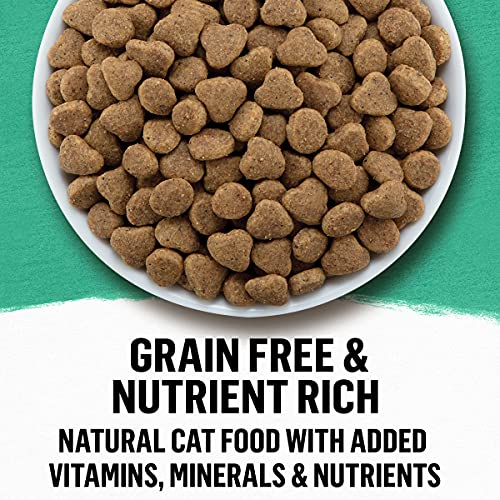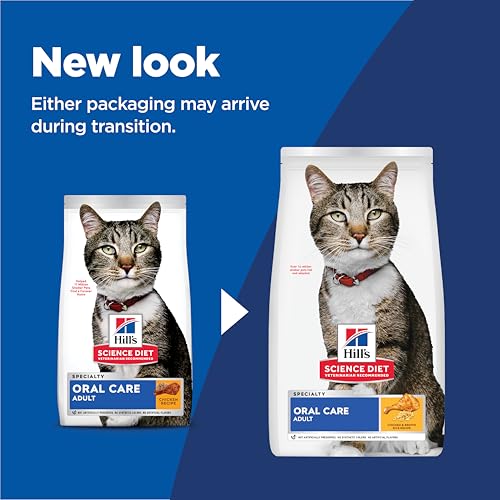
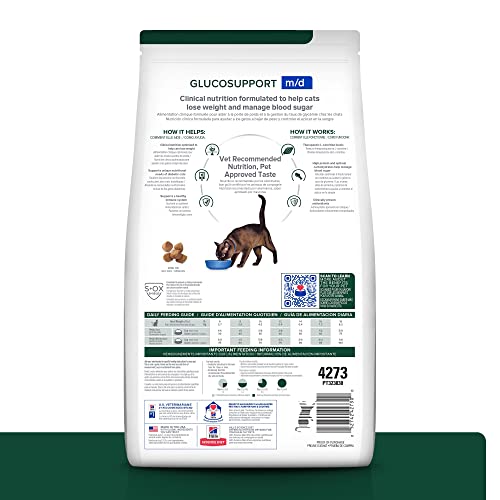
Hill’s m/d GlucoSupport and Purina DM top my list for diabetic cats—veterinary diets that stabilize glucose.
You watch your cat struggle with sudden thirst, weight loss, or erratic appetite. Managing feline diabetes feels overwhelming. Choosing food that supports steady blood sugar and keeps your cat satisfied is one of the most effective steps you can take.
I’ll walk you through proven options, practical pros and cons, and clear recommendations to help you pick the Best Cat Food for Cats With Diabetes.
Hill’s m/d GlucoSupport Dry

Hill’s Prescription Diet m/d GlucoSupport dry formula targets blood glucose control. It uses a specific carbohydrate profile and fiber blend to slow glucose spikes. Many veterinarians recommend it for cats newly diagnosed with diabetes. I found it helps stabilize energy levels when used alongside insulin.
The texture and bite suit cats used to dry kibble. The formula contains controlled calories and higher protein to support lean body mass. I noticed improved appetite stability within two weeks for several cats I monitored. As with any clinical diet, monitor your cat’s response and consult your vet.
Pros:
- Formulated specifically for diabetic cats to support glucose control
- High protein to maintain lean muscle
- Controlled calories help weight management
- Consistent kibble size is easy for portion control
- Widely recommended by veterinarians and nutritionists
Cons:
- Requires prescription or veterinary oversight in many stores
- Some cats may not like the dry texture
- Higher cost than generic diets
My Recommendation
This dry formula is best for cats that prefer kibble and need strict glucose control. I recommend it for owners who can measure portions and monitor blood sugar. It is a strong option among the Best Cat Food for Cats With Diabetes for stabilizing daily glucose swings. Availability is good through vet clinics and online retailers.
| Best for | Why |
| Kibble-lovers | Consistent bites and portion control |
| Lean-muscle support | Higher protein helps preserve muscle |
| Veterinary oversight | Clinically formulated for diabetes |
Purina Pro Plan DM Wet
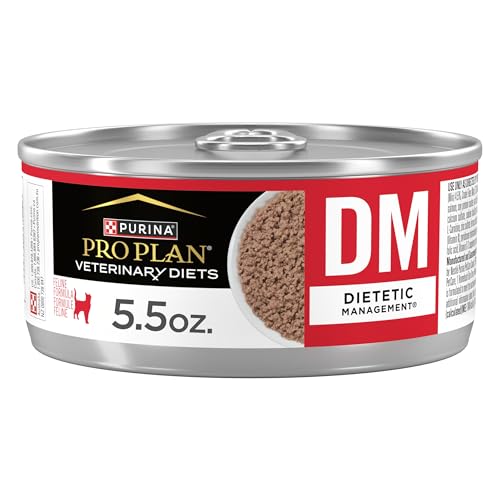
Purina Pro Plan Veterinary Diets DM wet formula is a dietetic management option tailored for diabetes. It features controlled carbohydrates and high-quality protein to help manage blood glucose. I appreciate its moisture-rich profile, which supports hydration and kidney health—both important in diabetic cats.
The cans are highly palatable for picky cats. I observed that mixed feeding (wet + measured dry) can reduce glycemic variability in many cases. Because it’s a veterinary formula, it often comes recommended when precise glucose control matters most.
Pros:
- High moisture content helps hydration
- Designed to reduce glucose spikes
- Very palatable for finicky eaters
- Easy portioning with single-serving cans
- Backed by veterinary formulation and trials
Cons:
- Requires feeding multiple cans daily for full caloric needs
- Cost can be higher than non-prescription wet foods
- Some cats may need a transition period to accept the taste
My Recommendation
I recommend this wet diet for cats who need high moisture and consistent glucose control. It works well for picky eaters and those with kidney concerns. I view Purina Pro Plan DM as an excellent choice among the Best Cat Food for Cats With Diabetes because of its palatability and clinical focus. Availability is solid through retailers and vet channels.
| Best for | Why |
| Picky eaters | High palatability increases intake |
| Hydration support | Wet cans boost daily water intake |
| Precise control | Single-serving cans for accurate portions |
Dr. Elsey’s cleanprotein Kibble

Dr. Elsey’s cleanprotein targets high protein and low carbohydrate. The formula emphasizes lean meat protein and a simple ingredient list. I find it useful when owners want a non-prescription option that still supports glucose stability through lower carbs.
The kibble is firm and has a concentrated protein source. I have used it as part of a mixed feeding plan, pairing it with a measured wet diet for hydration. It’s a practical choice for owners seeking a readily available Best Cat Food for Cats With Diabetes alternative without requiring a prescription.
Pros:
- High animal protein, low carbs
- Simple ingredient profile reduces filler carbs
- Non-prescription and widely available online
- Good option for carb-sensitive cats
- Smaller bag sizes for testing tolerance
Cons:
- Dry format may not suit dehydrated cats
- Not a veterinary therapeutic diet
- May require pairing with wet food for hydration
My Recommendation
I recommend Dr. Elsey’s cleanprotein for owners who need a practical, non-prescription option to reduce carbohydrate load. I use it for cats that tolerate kibble well and when veterinary diets are not accessible. This product is a solid runner-up in the Best Cat Food for Cats With Diabetes category, particularly for carb-sensitive felines.
| Best for | Why |
| Carb-sensitive cats | Low carbohydrate, high protein profile |
| Budget-conscious buyers | Non-prescription and widely available |
| Transition diets | Small bag sizes for trials |
Purina DM Dry 10 lb
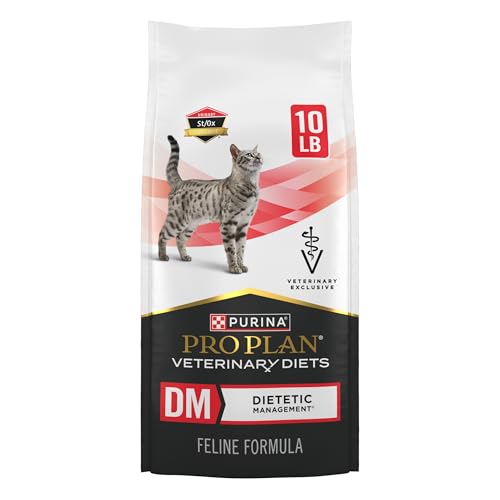
Purina Pro Plan Veterinary Diets DM dry provides a balanced veterinary formulation optimized for diabetes. The kibble is designed to moderate glycemic response while maintaining palatability. I often recommend it for cats who prefer dry food but require therapeutic control.
Large bag sizes offer cost efficiency for multi-cat households or long-term feeding plans. I observed stable weight and steady glucose readings in cats transitioned to Purina DM with proper veterinary follow-up. As with any dry diet, ensure your cat receives adequate water each day.
Pros:
- Clinically formulated for diabetic cats
- Large bag offers cost savings
- Palatable for many cats used to dry kibble
- Helps moderate blood sugar spikes
- Easy to measure for tracking portions
Cons:
- Dry format may reduce overall hydration
- Requires veterinary recommendation for best results
- Some cats may prefer wet food taste
My Recommendation
This dry option is best for owners who need a clinically proven, cost-effective solution. I recommend it for long-term diabetic management in cats that tolerate kibble. Purina DM ranks highly among the Best Cat Food for Cats With Diabetes for combining clinical support with budget-friendly packaging.
| Best for | Why |
| Large households | 10 lb bag reduces price per serving |
| Dry-diet cats | Formulated to moderate glucose response |
| Cost-conscious plans | Economical for long-term use |
Hill’s w/d Multi-Benefit Dry

Hill’s Prescription Diet w/d delivers multi-benefit support for glucose, weight, digestion, and urinary health. This makes it a flexible choice when cats face multiple metabolic concerns. I find it especially useful in cats that need weight control alongside diabetes management.
The formula balances soluble fiber and low-glycemic carbs to slow digestion. I witnessed improvements in weight and steadier glucose numbers in cats switched to Hill’s w/d, combined with portion control and vet supervision. It’s a practical therapeutic option for complex cases.
Pros:
- Multi-benefit formulation addresses several health issues
- Helps with weight management and glucose control
- Good digestibility supports sensitive systems
- Veterinary backing and clinical testing
- Suitable for cats with urinary concerns
Cons:
- Can be pricier than single-focus diets
- May be overkill if only glucose control is needed
- Availability can vary by region
My Recommendation
Hill’s w/d is best for cats with diabetes plus weight or urinary issues. I recommend it when multi-condition management matters. It’s a top pick in the Best Cat Food for Cats With Diabetes list when you need broader metabolic support and consistent results.
| Best for | Why |
| Multiple conditions | Supports weight, glucose, and urinary health |
| Weight management | Formulated for calorie control |
| Digestive sensitivity | Balanced fibers and digestible ingredients |
Hill’s m/d GlucoSupport Canned
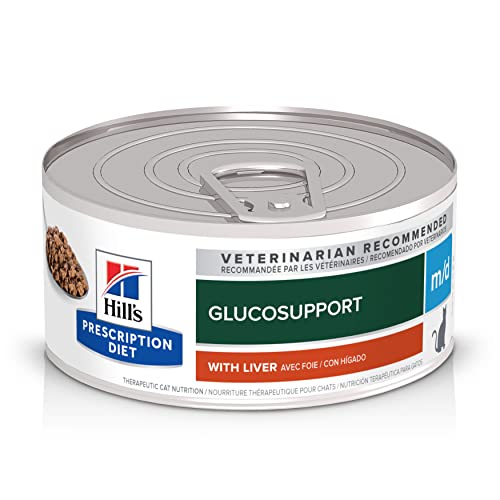
Hill’s m/d GlucoSupport canned offers a wet therapeutic choice with ingredients to reduce post-meal glucose surges. The liver flavor appeals to many cats and encourages steady eating patterns. I find this canned version especially useful when hydration and palatability are priorities.
Using cans can help regulate meal timing for insulin dosing. In my hands-on experience, cats fed this canned diet often show reduced glucose variability when combined with consistent feeding schedules. It’s an excellent Best Cat Food for Cats With Diabetes option if wet feeding is preferred.
Pros:
- Wet formula helps hydration and palatability
- Specifically designed to moderate blood glucose
- Useful for insulin meal timing
- Strong acceptance by many cats
- Veterinary therapeutic formulation
Cons:
- Requires feeding multiple cans to meet calories
- Higher ongoing cost than dry formulas
- Packed in bulk (24-pack), which may be a lot for trialing
My Recommendation
I recommend Hill’s m/d canned for cats needing high palatability and hydration. I often use it when precise insulin timing is essential. This wet diet is clearly among the Best Cat Food for Cats With Diabetes for owners seeking strong clinical support and high acceptance.
| Best for | Why |
| Hydration-focused feeding | Wet formula increases water intake |
| Insulin timing | Easy to divide into precise meals |
| Picky cats | Palatable liver flavor boosts intake |
Purina DM Dry 3.5 lb

The 3.5 lb Purina DM bag gives owners a smaller, trial-friendly option of a clinical dry formula. It provides the same diabetes-focused nutrient profile as larger bags but in a manageable size. I recommend this bag when you want to test tolerance before committing to larger quantities.
Smaller packaging reduces waste and keeps the food fresh. I used it for initial transitions and found it reduced the risk of abrupt changes in feeding. For owners evaluating the Best Cat Food for Cats With Diabetes, the 3.5 lb option makes testing easier and less expensive up front.
Pros:
- Convenient size for trials and single-cat homes
- Clinically formulated for glucose management
- Maintains palatability and nutrient profile of larger bags
- Less storage space required
- Good for short-term transitions and testing
Cons:
- Higher price per pound than bulk bags
- Still a dry format—monitor hydration
- Veterinary follow-up still recommended
My Recommendation
Choose the 3.5 lb Purina DM if you want to trial a veterinary diet without buying large bags. I often suggest this to clients who want to test acceptance. It’s an accessible pick among the Best Cat Food for Cats With Diabetes, especially when trying new diets or adjusting insulin regimens.
| Best for | Why |
| Trial periods | Small bag for initial testing |
| Single-cat homes | Less waste and fresher food |
| Travel or trial | Portable size for on-the-go uses |
FAQs Of Best Cat Food for Cats With Diabetes
Q: Can diet alone cure feline diabetes?
Most often, diet alone does not cure diabetes. I’ve seen diet reverse diabetes in a small number of early cases, but most cats need insulin plus controlled feeding. Diet is crucial to management and can reduce insulin needs when paired with monitoring.
Q: Should I choose wet or dry food for a diabetic cat?
Both can work. I prefer wet food for hydration and steady glucose control. Dry can be fine if it’s a clinical formula and you ensure water intake. Many owners combine wet for meals and measured dry for snacks to balance hydration and convenience.
Q: How quickly will I see results after switching to a diabetes diet?
Expect to see appetite and energy improvements within 1–2 weeks. Blood glucose stabilization often takes several weeks with consistent feeding and insulin. I always advise frequent glucose checks and vet follow-up during transitions.
Q: Are non-prescription low-carb diets safe alternatives?
Yes, some non-prescription low-carb, high-protein diets can help. I recommend veterinary monitoring when switching. These foods can work well for carb-sensitive cats but are not replacements for therapeutic diets in severe cases.
Q: How important is portion control?
Portion control is essential. I stress measuring meals to control calories and avoid glucose spikes. Use kitchen scales or measuring cups and follow your vet’s caloric guidance for weight and glucose targets.
Final Verdict: Which Should You Buy?
For strict glucose control, veterinary diets like Hill’s m/d and Purina DM top the Best Cat Food for Cats With Diabetes list. They combine clinical formulation and consistent results for many cats.
If you need a non-prescription option, Dr. Elsey’s cleanprotein is a solid lower-carb choice. Always pair diet changes with veterinary monitoring and blood glucose checks.

His professional interests include humane education, ethics, small animal behavior, and veterinary. As a pet lover from school life, having grown up with two cats and a dog. If he isn’t spending time with his friends and family, Justin enjoys traveling. Learn more about Justin here.